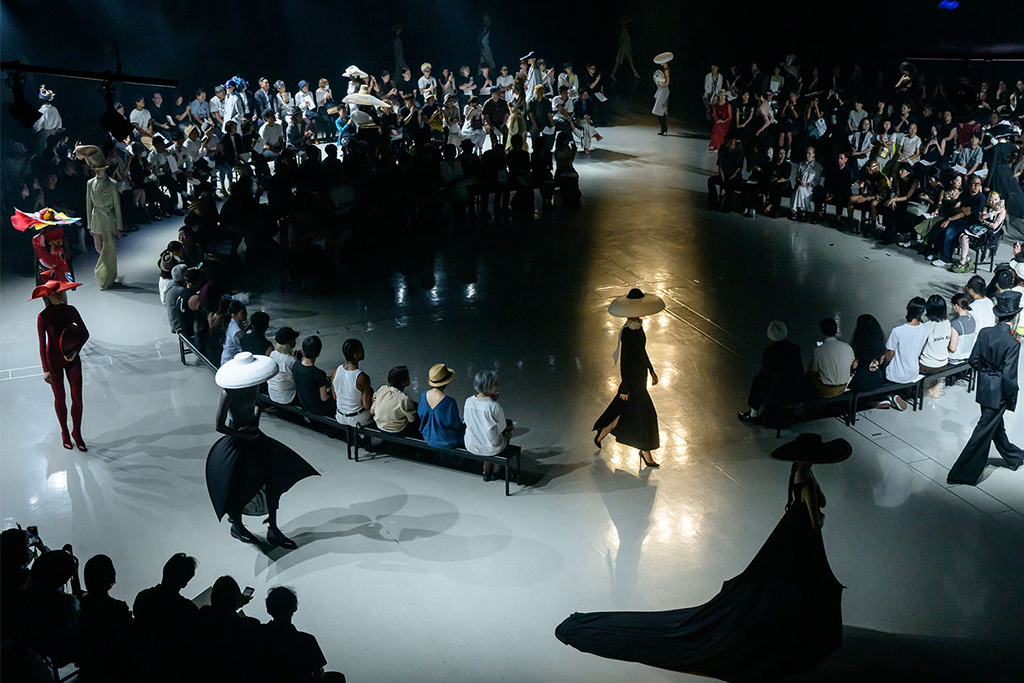
When most people think about the greats of Japanese fashion, minds typically land on Rei Kawakubo, Yohji Yamamoto, and Issey Miyake. Together, the fashion system—and the designs this trio created—would permanently reshape how fashion is conceptualized in Tokyo and beyond. Kawakubo’s 1969-born avant-garde label, Comme des Garçons, challenged Western beauty standards through monochromatic, deconstructed designs rooted in anti-fashion and freedom. Yamamoto similarly disrupted sartorial norms by reworking menswear staples into womenswear, while Miyake focused on creating universal, comfortable clothing for the masses. Together, their approaches reshaped fashion’s core principles and lent that intellectual energy to Tokyo’s fashion identity.


The intellectual foundations laid by these designers continue to inform how Tokyo Fashion Week operates today—less as a trend-driven marketplace and more as a platform for point-of-view–driven design.


The immense success of these designers helped establish the conditions for Tokyo Fashion Week as it exists today. Rakuten Fashion Week Tokyo, now in its second year under its current commission, has become a central platform for both emerging and established Japanese designers. Today, the event continues to attract designers with intentional point-of-views and intricate aesthetics that can go toe to toe with some of the most astute western designers.


Nowadays, Tokyo Fashion Week operates less as a spectacle-driven marketplace and more as a developmental platform—one that prioritizes identity formation, experimentation, and long-term growth. Rather than centering immediate commercial success, the week often functions as a space for designers to articulate their fashion philosophy, test ideas, and refine visual language. This approach reflects the broader sartorial essence that has long defined Tokyo: design as process, not product. In that way, Tokyo fashion week continues the lineage established by its predecessors, offering a system where concept is not opposed to commerce, but allowed to mature before it meets it.


[Tap into the South’s style, sound, and scene as soon as it happens. Subscribe to Sitch and never miss a beat.]
Leave a Reply