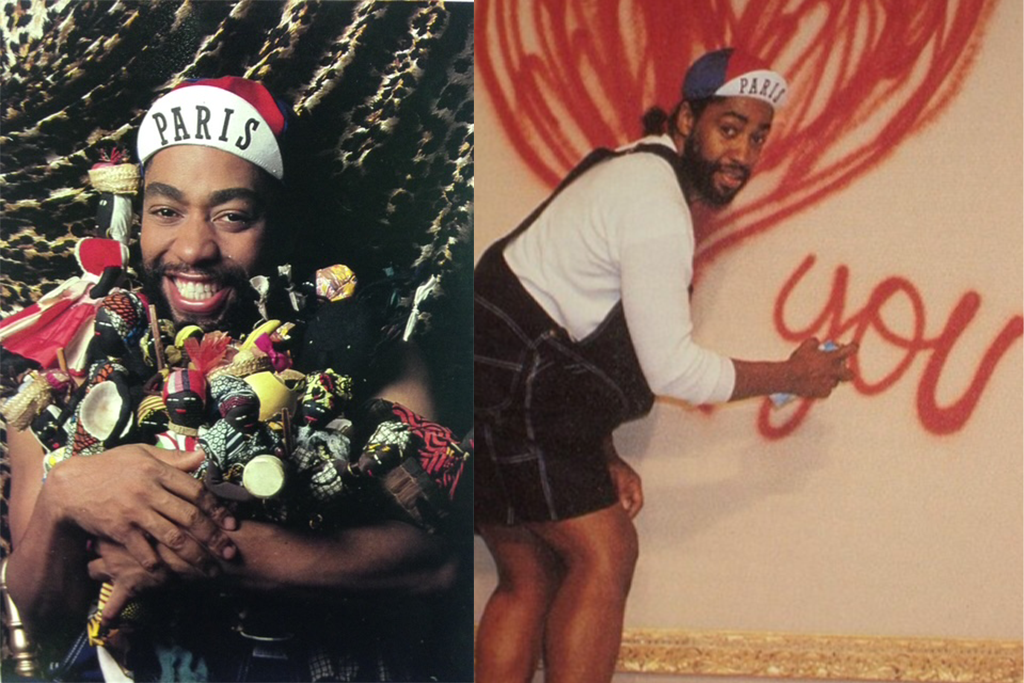
Before he became a Parisian darling, a fashion fixture, and the first American to be admitted into the prestigious Chambre Syndicale du Prêt-à-Porter des Couturiers et des Créateurs de Mode, Patrick Leroy Kelly cut his teeth in the Southern world of fashion in Atlanta, Georgia. It was the mid-1970s, and Kelly, a young, Black gay man from Vicksburg, Mississippi, arrived with little more than a vision and a boundless sense of ambition. The city became his proving ground, a place where he would transform raw talent into a burgeoning business against incredible odds—a place he could build the foundation of a fashion brand.
Patrick Kelly Arrives in Atlanta
Kelly’s journey to Atlanta, “The City of Lights,” was anything but conventional. Arriving at the Greyhound bus station, he befriended Drag Queens who worked the streets and did late-night performances in the bars around town. Patrick showcased his talent for designing dresses for the vibrant drag queen community in exchange for a place to stay.
This period was crucial for his development as a designer. He knew how to sketch, estimate fabric costs, cut simple patterns, and sew garments. Also, he learned to create show-stopping pieces that demanded attention, were meticulously crafted, and were infused with a sense of theatricality. Patrick flourished in this space. The drag queens and church women — movers of the Atlanta fashion scene — were his first muses, his first runway models, and his first loyal customers. They taught him the power of spectacle and the importance of clothes that not only fit but also told a story.
His First Muses
His early days were a mixture of hustle and ingenuity. While living on the streets and in gay bars, Patrick landed a job working at AMVETS (American Veterans, a nonprofit organization with a thrift shop). He sorted designer castoffs and would sell these clothes not in a fancy boutique, but in a small corner of the Wizards of Ahs hair salon (Moth Ball Matinee), where he could connect with clients and begin infusing his designs. This wasn’t just a business strategy; it was a way to build a community. The work was tireless, and the resources were minimal, but his creativity was limitless. He sold not only his own creations but also vintage clothing he had reworked, infusing old garments with new life and a distinctly “Patrick Kelly” flair.
To make ends meet and to continue honing his skills, Kelly took on a variety of gigs. He taught at the Barbizon Modeling School, where he imparted his knowledge of style and presentation to aspiring models. This experience provided a steady income and kept him deeply embedded in the local fashion scene.
A Fashion Education in Atlanta
Simultaneously, he took on work as a window dresser, a role that proved to be both a passion project and a vital learning experience. He was willing to work for little to no money, simply for the chance to learn and create. At Yves Saint Laurent Rive Gauche, he worked unpaid, soaking up the craftsmanship and aesthetic of a legendary fashion house. This was his unofficial education, his own private fashion academy. His paid work at Rich’s (Macy’s) department store offered him a chance to display his talents on a larger, more commercial scale, giving him insight into the business side of fashion retail.
The culmination of his efforts was the opening of his own standalone store near Buckhead. This was the moment his relentless drive paid off, a testament to his ability to build a brand from the ground up. He used local fashion shows to showcase his designs, generating buzz and attracting a wider clientele. These were not glitzy, high-budget productions but grassroots events that relied on community support and word of mouth. Kelly’s designs were fresh and vibrant, reflecting his own personality.
Building the Patrick Kelly Brand
Throughout his time in Atlanta, Kelly faced the dual challenges of being Black and gay in an industry that was overwhelmingly white and often heteronormative. Yet, he never let these obstacles define him. Instead, he used his unique perspective to inform his work, creating designs that were inclusive, celebratory, and deeply personal. He built a fashion brand not on a huge financial investment or connections, but on a foundation of hard work, an unwavering belief in himself, and a genuine connection with the people he dressed.
A Return to Atlanta
Patrick returned to Atlanta for the July 1988 Democratic Convention, where Mayor Andrew Young presented him with a Proclamation. At this time, Kelly showed his 1988 Fall/Winter collection sponsored by the Atlanta Apparel Mart. The fashion show “Heartstrings” raised over $200,000 for Atlanta AIDS groups.
Atlanta was a stepping-stone, a launchpad where he learned to build, to dream, and to overcome, setting the stage for the global recognition that would follow. The city gave him everything he needed to succeed, and in return, he showed what was possible when talent meets unyielding determination.
[Tap into the South’s style, sound, and scene as soon as it happens. Subscribe to Sitch and never miss a beat.]
Leave a Reply