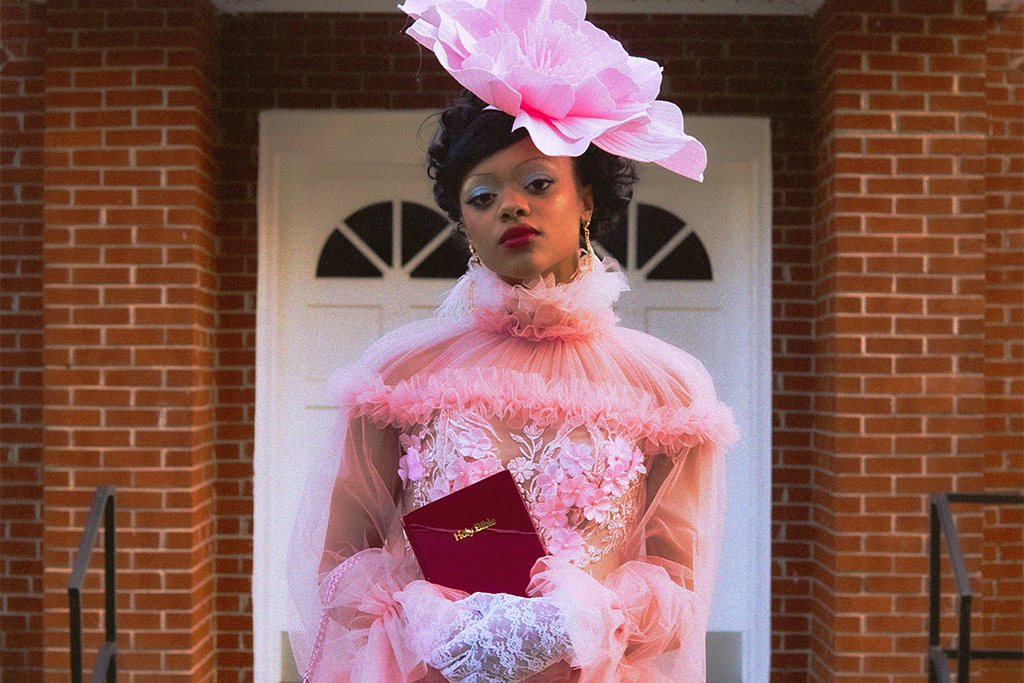
As a young boy growing up in Atlanta and attending Zion Grove Baptist Church in Ellenwood, Georgia, fashion has been an integral part of my identity for as long as I can remember. From being barely tall enough to crawl under the pews and admire the church ladies’ shoes to peeking over big, billowing hats to catch a glimpse of sister Howard’s gleaming kiss-lock handbag—the church is where I first understood the power of fashion and how you hold your head a little higher when you look good.

Between the Saturday morning ritual of getting a fresh haircut to the Saturday evening dash to Macy’s with my mother and grandmother to find just the right outfit for ushering or revamping their Sunday best, fashion has always been my spiritual gift.
For most Southerners, fashion and the idea of good style didn’t begin in a department store or a mall. It didn’t start with Vogue. It began in the sanctuary, Sunday morning, in your grandmother’s closet—this is something André Leon Talley and I have in common. André Leon Talley, known for being Anna Wintour’s right-hand man during his tenure at Vogue and who was also the inspiration behind this year’s Met Gala’s dandyism theme, grew up as a North Carolina boy with an affinity for dressing well, thanks to his grandmother. In his documentary, “The Gospel According to André,” Talley expressed how the church was his first introduction into fashion, and through the watching of his grandmother in this space, he developed and finetuned his eye for what sartorial beauty is—and he used this experience as his guide until his dying day.


Before the names of Versace or Givenchy became prominent in fashion, the way a hat could sit high on the head, like a crown, was well known. Matching purse-and-shoe sets were a given. The preciseness of a pressed pleat spoke volumes. Men starched the crease into their slacks and button-down shirts with intention. Women steamed pantyhose like a sacrament.
[Tap into the South’s style, sound, and scene as soon as it happens. Subscribe to Sitch and never miss a beat.]
Church on Sundays was a place to parade an outfit or rehearse a song—the birthplace of our flair. This building is where fashion and music were stirred, sanctified, and allowed to bloom in our image.

However, before this discussion proceeds, it’s crucial to distinguish between the church, the Black church, and the culture that surrounds these physical spaces. “Church” is a general term referring to any denomination and typically means a body of believers. The Black church, however, normally refers to Christian denominations and congregations within the United States that are led by and minister to African Americans, along with their collective traditions and members.
Within this landscape, the physical temple serves as a holy and protected space where believers gather for worship and fellowship. While the culture and influence of the Black church extend far beyond the four walls of worship—thanks in part to social media and scripture’s call to spread the word—the spirit and purpose of the Black church remain rooted in community, resilience, and the cultivation of both faith and self-expression through various forms.


There’s a certain elevating quality that comes with knowing your worth and expressing it through your attire within the Black church.
The tradition has roots deep in survival and self-respect. In the Antebellum South, enslaved people were sometimes allowed one day off: Sunday. They used this day to worship God, but the ancestors also used it to make a statement. With as little as they had, enslaved people still made sure their Sunday best was clean, bright and beautiful. In retrospect, this was a quiet resistance—a refusal to settle for less.

Through this resistance formed a ritual. Generations of Black families passed down the practice: lay the clothes out on Saturday night, polish the shoes, wrap your hair. On Sunday, when it came time to step into church, you weren’t a regular, old member of the congregation—you were a reflection of God’s glory.
Even now, those rituals remain loud. A church outfit not only enters the room, but someone must hear and feel this outfit.

Fashion and sound always converged within the Black church ecosystem. You can hear a look as much as you see it: the swish of satin, the soft click of kitten heels on tile, the creak of a well-worn pew as someone adjusts their shoulder pads. The choir was often the flashpoint. Coordinated robes. Custom suits. Your favorite soloist had a signature getup. Your choir director might’ve had a special, custom vest for Easter Sunday—all of these characteristics make up the archetypes of the Black church fashion lexicon.
And in the South, the garments, but more so the showmanship, took center stage. Stepping. Fanning. Rocking in rhythm. Fashion was a choreographic form. A conversation between fabric and body. Between worship and identity.

“Back then [60s and 70s], women took pride in how they looked. They wanted everyone to envy their style and how classy they looked,” said Chris Glover, a member of Zion Grove Baptist Church in Ellenwood, GA. For many, this notion remains applicable today despite the changing tides.

Today, the Black Southern church is one of the last places where multigenerational fashion still speaks volumes. Further, think grandmothers in netted hats and gloves, deacons with cufflinks and pocket squares, and children learning how to sit still in ruffles and lace socks. Also, don’t forget clip-on earrings snapped on the front of pumps to “dress up” a plain shoe. Traditions continue to pivot and regal essence is still upheld.
But church fashion’s influence doesn’t stop at the sanctuary doors.

In the past few years alone, we’ve seen designers and celebrities echo this language of sacred style. Beyoncé’s Renaissance World Tour and Cowboy Carter Tour visuals were a full Southern revival, complete with wide-brimmed hats, structured suits, gloves, hosiery, and more. Pyer Moss blended spirituality and futurism with robes and high collars that felt lifted straight from an Atlanta pulpit for its spring/summer 2020 collection. Telfar’s clean lines and utilitarian luxury recall the quiet uniformity of an usher board. And Atlanta brands like Tiffany Brown Designs and Jeofroi are shaping silhouettes that feel as reverent as they are timely.
The relentless drive to be the flyest and best-dressed in any room didn’t stay confined to church pews—it spilled over into popular culture. Gospel artists like Yolanda Adams, Kirk Franklin, Mary Mary and The Clark Sisters moved audiences with their powerful lyrics and voices while turning their fashion choices into statements of style and spirit, fueling the early 2000s and 2010s with a fresh sense of gospel glam. The Clark Sisters are known for their flashy style—in the form of coordinated skirt suits in electric hues and elaborate, stacked updos that would make anyone the center of attention—they are household names and inspirations.

For example, Mary Mary, the sister duo Erica and Tina Campbell, who churned out chart-topping hits like “God In Me,” “Shackles,” and “Go Get It,” also rewrote the rules of Christian fashion. With figure-hugging bodycon dresses, sky-high heels, and daring hairstyles, they’ve confidently challenged old stereotypes about how a woman of faith should dress, proving you can honor God and embrace modern style simultaneously.
Kirk Franklin, meanwhile, is no stranger to making bold fashion choices himself. Known for his love of colorful, trendy streetwear, Franklin rocks chunky sneakers, festive mohair sweaters, and eye-catching “logomania” pieces, which set him apart as one of the best-dressed men in the church scene today.
Then there’s Yolanda Adams—whose affinity for impeccable cuts and designer fits is well-documented. Remember her iconic BET How I’m Livin’ episode? Her closet was a treasure trove of top labels and ensembles that balanced wholesomeness with a fun, flirty flair. If anyone embodied a stylish paradox, it is Adams.

The through-line? Respect. Presentation. A sense that style is not just about looking good; it’s about showing up right. A prime example of this is my grandfather, who had 200 suits in sharp, neutral colors with shoes to match—and you can’t forget the fedora. That’s what made his entire church attire. He always told me, “If you don’t care about how you look, no one else will.”
In a world where Black folks—especially in the South—are still told to shrink, assimilate or tone it down, church fashion remains a space of refusal. This subcategory emphasizes proudly: I will wear what I want. I will command attention. I will match from head to toe if I feel like doing so. I will step out as this moment matters.
Because it does.

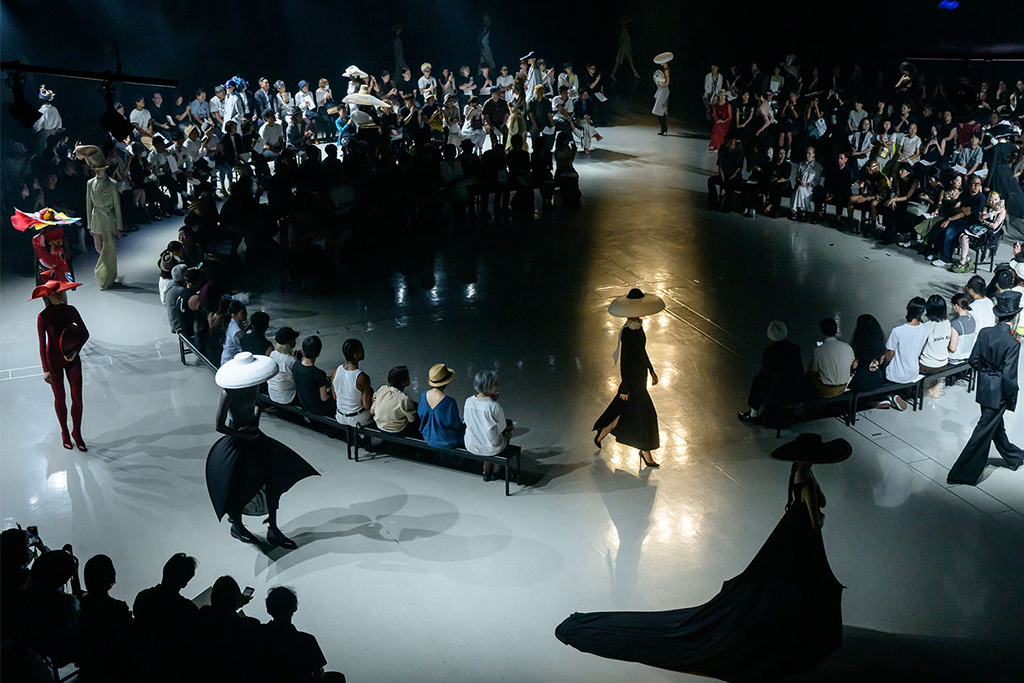
Black church fashion is not merely sentimentality or about pictures of pretty things but instead serves as a form of creativity amid starkness. Our nostalgia beckons to return to the runway we knew first. A tribute to the women and men who taught us to present ourselves with pride, how to iron intention into every seam and the importance of believing we were worthy of taking up space—whether in the choir stand, the fellowship hall or the front row of Fashion Week.
Black Southern church fashion is the genesis. The church is where fashion and music first found us. And they’re ours to cherish forever.
[Check out this story and more from our Black Music Month Issue below.]

The Black Music Month Issue – Sitch Zine, Vol. 1
This zine begins to answer questions for those who wonder about Atlanta and where our culture lies.
[Tap into the South’s style, sound, and scene as soon as it happens. Subscribe to Sitch and never miss a beat.]



Leave a Reply