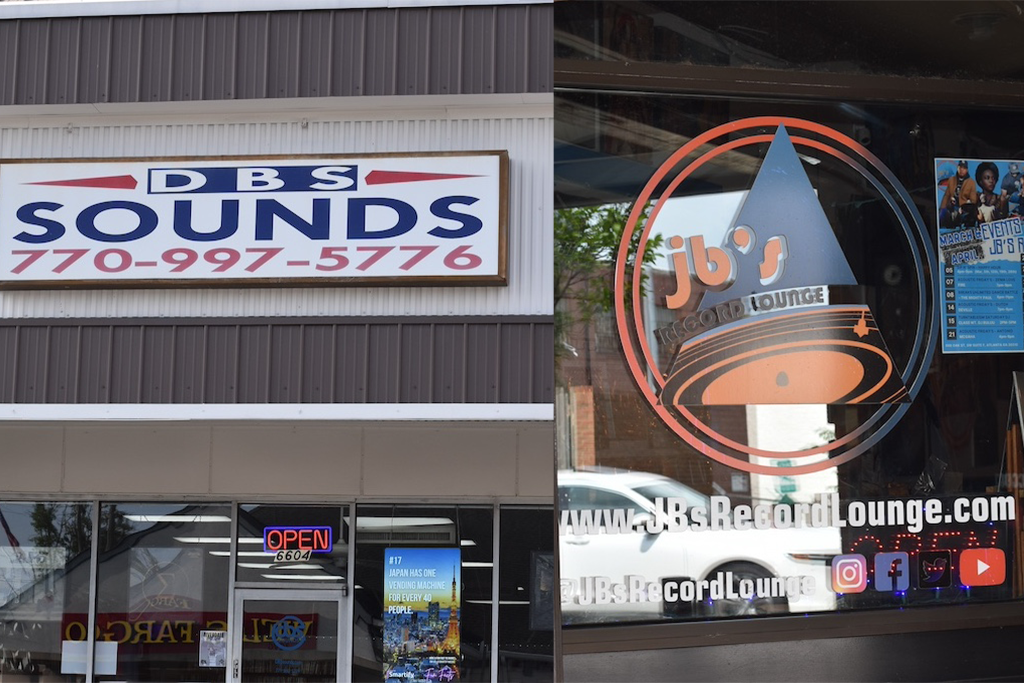
For decades, Atlanta residents and visitors alike have been aware of A-town’s diverse and eclectic music scene. Before Jermaine Dupri swept over the city and we birthed The Migos, Rich Kidz, and Future, it all started in our neighborhood vinyl stores. Between shops from the 60s-80s like Turtles to Peaches and Wax N’ Facts (alive and kicking in Little Five Points) to contemporary options like Moods Music thriving in the same neck of the woods, to DBS Sounds and JB’s Record Lounge, the vinyl store is a poignant throughline within the musical ecosystem of Atlanta, no matter the year or decade.
According to Luminate, the music business’s trusted business reporting firm, vinyl purchases continued to climb in 2024. The firm also found that CD and cassette sales increased last year. (Honestly, it doesn’t come as a shock, considering how everyone is into tangible media now.) However, this boom occurs during a turbulent and unpredictable time when tariffs are affecting everything—and consequently, vinyls are also impacted, further diminishing the already dwindling number of Black record shops, not only in Atlanta but across the country as a whole.
Despite those pressures, shops like DBS Sounds and JB’s Record Lounge continue to thrive by staying rooted in the communities they serve while evolving with Atlanta’s ever-shifting music scene.
[Tap into the South’s style, sound, and scene as soon as it happens. Subscribe to Sitch and never miss a beat.]
DBS Sounds: Southside’s Anchor Since 1994

Established in Riverdale in 1994, DBS Sounds has held the Southside down for three decades. Founded by Tobago Benito, the shop has become a cultural fixture and a hub for Atlanta’s music community.
Running an independent record store in 2025 is, as Benito puts it, is both “challenging but exciting.” A surge of younger buyers, particularly young Black women, has fueled the resurgence of vinyl. “I’m seeing a lot of them coming in, picking up the players, picking up the vinyl,” he says. “They’re driving the industry right now.”
But even with growing interest, the business isn’t easy money. Stores like DBS face tight profit margins—typically making only about 25% on each sale. “You’re putting up a dollar to make a quarter,” Benito explains. Rising wholesale prices and artists selling directly to consumers chip away at sales, forcing stores like his to find creative ways to stay afloat. “It’s just up to us to super-serve our customers, creating exciting events—from in-stores, block parties, things of that nature.”


These events have become central to DBS’s survival and reputation. Recent appearances from gospel icon Yolanda Adams and signings with artists like Ann Nesby continue to bring new faces through the doors. “Tons of people follow the artists,” Benito says, “But once they come in and see what we carry, they tend to come back.”
At the core of DBS’s inventory strategy is a customer-first approach. “We look at the top 50 of what’s selling,” Benito said, “But if a customer comes in looking for something we don’t have, I’ll bring it in and stock it.”
In other words, DBS carries everything from Taylor Swift to heavy metal acts like Ghost and underground R&B favorites like Brent Faiyaz— artists Benito admits his customers often introduce him to first. “It works both ways. I turn customers on to new music, but they also teach me.”
Retrospectively, the pandemic unexpectedly boosted business as well. “Our best years in business were during and after the pandemic,” Benito recalls. “People were tired of being cooped up. Once Georgia opened up, sales skyrocketed.” Part of that surge, he acknowledges with a laugh, was fueled by people having “that PPP money—legal and illegal.”

But DBS’s role extends far beyond retail. The shop often functions as an informal gathering, safe space, and haven for the community, hosting mental health discussions in tandem with career talks for young Black men and coat drives through Benito’s non-profit. “We’re more than a store—we’re like a modern-day barbershop,” Benito says. “People come in, talk politics, relationships, finance. We’re bankers, therapists, marriage counselors—all of it.”

Still, Benito is frank about the uphill battle Black-owned stores face in an industry that often overlooks them. While DBS has played a role in breaking numerous local artists, broader support remains inconsistent. “The music business needs to do more for Black-owned stores,” he says. “The artists we help breakthrough should support us too — with more in-stores and more visibility. Even a simple post on social media can make a difference.
JB’s Record Lounge: West End’s Vinyl Sanctuary

Tucked into the historic West End, JB’s Record Lounge feels like a space made for discovery. The exterior catches your eye, but the moment you step inside—greeted by the scent of incense and the unmistakable smell of wax—you know it’s something more than a store.
For JB, the shop’s co-owner, running a record store in Atlanta today isn’t just about moving units. “It’s like reintroducing people to vinyl,” he says. “Not just the sound, but the lifestyle and the experience.” This notion encompasses everything from teaching newcomers how to handle a record to breaking down the various stages of turntables based on someone’s personal “vinyl journey.”
Inventory in the store starts with personal taste but quickly expands based on the community’s tastes. “All record stores are reflections of the owner,” JB says. “But we stock things I’ve never heard of, too. You’ve got to give the people what they want while still learning and discovering artists yourself.”


Consequently, the push-and-pull is part of what makes JB’s unique. It’s not a space defined by trends or algorithms. “When it comes to hip-hop, the popular stuff doesn’t move,” says Mike, who is a close friend and also works at the shop. “It’s the artistic records that fly out the door. Tyler, the Creator is like Thriller in here. Kendrick Lamar. The albums with stories. The albums with continuity sell.”
Even in a streaming-dominated world, the shop’s biggest growth engine hasn’t been online, it’s been offline, through pop-ups and in-person events. “Pop-ups have been our most cost-effective marketing tool,” JB says. “We’re out in front of people, meeting them where they are, and selling records while we’re doing it. You won’t find another store that cares this much about what individual DJs spin.” Being attentive has helped the team build a loyal base across the city’s music community.
Moreover, the mission behind JB’s goes deeper than marketing or sales. As a working musician himself, JB opened the shop with a vision of restoring something that was lost: performance spaces for Black independent artists. “We were tricked out of our Chitlin Circuit,” he says. “Our white counterparts can be non-household names and still make a living performing at smaller venues. But we’ve lost those kinds of spaces.”

To that matter, JB’s isn’t just a store—it’s also a stage. The team regularly hosts live shows and opens the floor to local artists, especially those without access to formal venues. “We wanted to give indie Black musicians a place where they could perform, get heard, and build something sustainable.”
The store also functions as a cultural archive, what the staff often refers to as “curating spirits.” Every piece of vinyl is a living artifact. “Vinyl captures more than just music,” Mike says. “It captures the spirit of the moment. These records hold energy.”
Increasingly, when the conversation turns to nostalgia, the response is immediate: the feeling helps. “What is nostalgia without vinyl?” JB asks. “Vinyl is recorded history. It’s art history. And we’re the ones preserving it.”
Still, the shop’s most significant need isn’t abstract. It’s simple visibility. “If I could ask for one kind of citywide support,” JB says, “I’d say this: just come by on a Saturday. See if we’ve got something you like.”

The team also encourages followers to connect online. “Follow us at @JBSRecordLounge,” they add. “Showing some love would let us know that people want us here and that they see the value in what we’re doing.”
The vinyl shop is a sacred place. A wonderland of wax where the music-obsessed digs deep and the curious drift in, hoping to feel something real. In the soft crackle of a needle drop, between gospel and garage rock, funk and futurism, you can find yourself again, or someone you forgot you were.
But when Black-owned record stores disappear, we don’t just lose places to shop. We lose living archives. We lose culture makers. We lose our soundtracks, our safe havens, our stake in the culture we helped build.
And as Amazon carts get fuller and big-box shelves get taller, these small shops fight to stay above water. So if you believe in preserving heart and culture—in every sense of the word—then let that belief live in your dollars, your visits, your posts and your praise.
Because once they’re gone, we don’t get them back.
[Tap into the South’s style, sound, and scene as soon as it happens. Subscribe to Sitch and never miss a beat.]



Leave a Reply