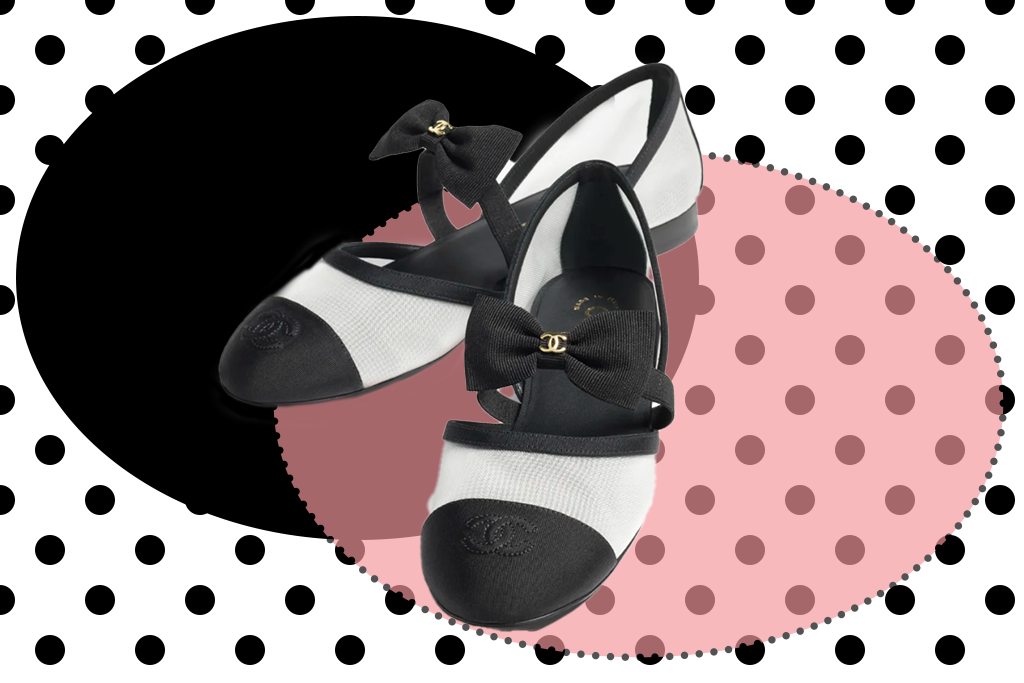
Why has Chanel become “just for the girls”? The brand has a solid foundation in menswear, yet in 2025, a man in Chanel Mary Janes gets the trespasser treatment?
On Twitter (never calling it ‘X’), user @YvngJac posted a monochromatic black-and-white look: a sweater embellished with a face made out of sequins, crocodile-embossed leather shorts, ruffle socks, and the star of the show—white Chanel Mary Jane flats with black toe caps, paired with black sunglasses hanging from the signature Chanel gold and black chain for maximum glimmer.
In a world where the past idea that clothing has a gender has dispersed, you’d think this ensemble would receive praise. Instead, the comments were full of insults, sneers, and the inevitable dash of homophobia, all over the fact that a man dared to wear Chanel flats. People told him to “leave some things for the girls” as if a pair of shoes has chromosomes. When barely even a century before this, Coco Chanel herself was the one crossing gender lines.
She valued the straight lines, roomy fits, and quiet authority of menswear, and she lived in it—in a way. Chanel was famous for raiding her lovers’ closets, English polo player Boy Capel’s blazers, the Duke of Westminster’s knitwear, and reworking those pieces for women. By leaning into these aspects, Chanel’s brand severed as a form of rebellion in a time when society said women should be soft and “fit-in” (no pun intended); Her aesthetic provides a way to standout and be structured in a buttoned up way, thereby challenging those misogynistic and antiquated notions while saying “women can do it better.”
This wasn’t a one-off. Chanel built her name on menswear fabrics and silhouettes at a time when women were still getting trussed up in corsets. She turned jersey—a material “hitherto confined to underwear and men’s sporting clothes,” as biographer Justine Picardie notes in Coco Chanel: The Legend and the Life—into dresses, jackets, and separates that let women actually breathe and move. The look felt relaxed, and it conveyed a new kind of elegance: one that came from comfort and confidence, not frills and boning.
And of course, there’s the suit. The Chanel suit—often asserted as the ultimate in feminine elegance—was built on men’s tailoring. Its boxy jacket fit, according to the Victoria and Albert Museum, was “softened for a feminine figure” but still carried “the structure and practicality of menswear.” Chanel’s customers weren’t just buying a skirt set; they were buying into the thrill of crossing the gender line without apology.
Further, although Chanel—the designer and the brand—has never produced a full-fledged menswear line (or collection for that matter), it has dipped its toe into unisex offerings (as safe as they may be—see Pharrell’s collaborative capsule collection featuring appliquéd hoodies), often teasing what could be. For Chanel, the person, gender lines didn’t stop her from raiding men’s wardrobes, so why should it stop a man from borrowing a notion from such a well-dressed woman? Inspiration has never belonged to one gender. In fashion, it’s fair game — and in Chanel’s case, it’s practically the brand’s origin story.
So it’s more than a little ironic that, in 2025, a man in Chanel flats gets scolded for “stealing from women,” when the phenomenon has been going on for a while now. If anything, wearing Chanel as a man is one of the most historically accurate ways to wear Chanel.
As the industry chants this ideal repeatedly, like the flickering flame of hope encircled by the plague of uncertainty entrenching the United States right now, the gender boundaries of fashion have always been porous. It seems to be a topic people still can’t grapple with. Yves Saint Laurent put women in tuxedos. Jean Paul Gaultier put men in skirts on the runway in the ’80s. Pharrell has worn pearl chokers and leather handbags for years without losing his cultural currency. And in 2023, Chanel itself tapped Kendrick Lamar as a brand ambassador. Masculinity and femininity aren’t fixed measures in fashion, and they really never were to begin with.
That’s what makes the “leave it for the girls” argument so flimsy. If anything, excluding people from wearing something because of their gender undercuts fashion’s entire point: freedom, experimentation, and play. Without those things, we wouldn’t have Chanel in the first place.
There’s also something deeply unoriginal about trying to gatekeep a brand that became iconic because it broke rules. Chanel cared about what was chic, what felt good, and what made her stand out from the crowded, lace-clad society women.
Finishing up the point, a man in Chanel Mary Janes is not some far-flung idea, it’s another form of pushy expression. If you want to protect Chanel’s legacy, don’t tell men to “leave it for the girls.” Tell them to keep wearing it proudly, just like Coco would have.
Be sure to subscribe to our newsletter for more content like this and follow us on Instagram, TikTok and Facebook!
Leave a Reply